
For fiscal year 2026, the Small Business Administration waived upfront guaranty fees on qualifying 7(a) manufacturing loans up to $950,000 and eliminated both the upfront fee and the annual service fee on all 504 manufacturing loans. On a typical $500,000 SBA loan, that saves you $10,000–$15,000 in fees that would otherwise come out of your pocket at closing.
This program expires September 30, 2026. There is no guarantee it will be renewed for fiscal year 2027. If you own a product-based business — or you’re starting one — this is the cheapest SBA financing will be for the foreseeable future.
What the Fee Waiver Actually Saves You
SBA loans carry guaranty fees that most borrowers don’t realize exist until they see the closing disclosure. Here’s what the standard fee schedule looks like — and what you’d pay after September 30 if the waiver expires:
| Loan Amount | Standard Guaranty Fee | With FY2026 Manufacturing Waiver |
|---|---|---|
| $50,000 | $0 (already waived under $150K) | $0 |
| $150,000 | $0 (already waived under $150K) | $0 |
| $300,000 | $9,000 (3%) | $0 |
| $500,000 | $15,000 (3%) | $0 |
| $700,000 | $21,000 (3%) | $0 |
| $950,000 | $33,250 (3.5%) | $0 |
For 504 loans, the waiver is even broader: both the upfront fee and the annual service fee are zeroed out, regardless of loan size. That annual fee savings compounds every year of the loan term.
This isn’t a rate reduction or a marketing promotion. It’s a congressionally authorized fee elimination that applies to every qualifying manufacturing loan numbered during FY2026.
Do You Actually Qualify? Probably — and Here’s Why
“Manufacturing” sounds like steel mills and assembly lines. The SBA’s definition is much broader. If your business falls under NAICS codes 31–33, you qualify. That includes:
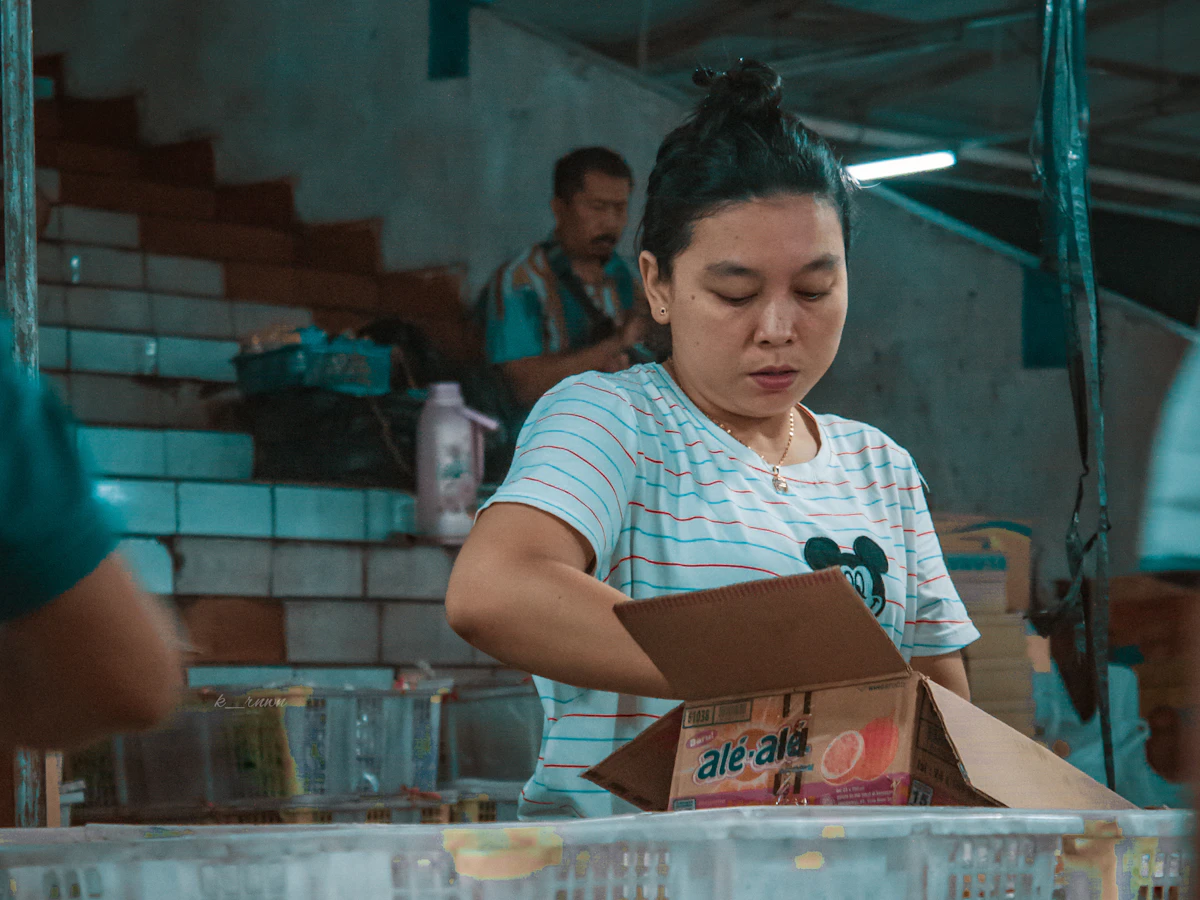
Food and Beverage (NAICS 311–312)
- Bakeries and specialty food production
- Meal prep and packaged food companies
- Specialty beverage production (cold brew, kombucha, juice)
- Candy and confectionery manufacturing
- Spice blending and seasoning production
Personal Care and Cosmetics (NAICS 3256)
- Skincare products
- Haircare and styling products
- Soap and cleaning compound manufacturing
- Essential oils and aromatherapy products
Apparel and Textiles (NAICS 313–316)
- Clothing manufacturing and cut-and-sew operations
- Textile finishing and fabric coating
- Leather goods and handbag production
- Custom uniform or workwear manufacturing
Other Qualifying Categories
- Jewelry manufacturing (NAICS 33991)
- Candle manufacturing (NAICS 31199)
- Printing and related support (NAICS 323)
- Furniture and custom woodworking (NAICS 337)
- Pottery, ceramics, and glassware (NAICS 32711–32712)
The classification is based on what your business does, not how big it is. A woman producing artisan candles in a 1,500-square-foot workshop qualifies under the same NAICS code as a large-scale manufacturer. A specialty food company shipping direct-to-consumer qualifies alongside industrial food processors.
If you’re not sure about your NAICS code, your local SBA district office or a SCORE mentor can help you verify your classification. This takes a single conversation — don’t let classification uncertainty cost you $15,000 in savings.
7(a) vs. 504: Which Manufacturing Loan Fits
Both SBA loan programs offer fee waivers for manufacturing, but they serve different needs:
SBA 7(a) Manufacturing Loans
- Maximum: $5 million
- Use: Equipment, inventory, working capital, refinancing — the most flexible SBA program
- Fee waiver: Upfront guaranty fee waived on loans up to $950,000
- Best for: Women who need working capital alongside equipment purchases, or who want flexibility in how they deploy the funds
SBA 504 Manufacturing Loans
- Maximum: $5.5 million (with CDC portion)
- Use: Major fixed assets — equipment, real estate, facility improvements
- Fee waiver: Both upfront fee AND annual service fee waived at ALL loan sizes
- Best for: Women making significant capital investments — a new production facility, major equipment upgrades, or commercial real estate for manufacturing operations
The strategic move: If you need both equipment and working capital, consider splitting your financing: a 504 loan for the equipment (zero fees at any size) and a smaller 7(a) loan for working capital (zero fees up to $950K). Two loans, zero fees on both.
The Application Sprint: 22 Days to Get Numbered
The fee waiver applies to loans that receive an SBA loan number by September 30, 2026. Not applications submitted by September 30 — loans numbered. That distinction matters, because the numbering process requires your lender to complete their review and submit to the SBA.
Here’s a realistic timeline for the next three weeks:
Days 1–3: Find Your Lender
Not every SBA lender has experience with manufacturing classifications. You need one that:
- Has originated manufacturing SBA loans before (ask them directly)
- Is an SBA Preferred Lender (PLP) — they can approve internally without full SBA review, which is critical for speed
- Can commit to getting you numbered before September 30
Contact 2–3 lenders simultaneously. You’re racing a deadline — this isn’t the time for sequential shopping. Lendesca can help you identify SBA preferred lenders experienced with manufacturing loans in your area.
Days 3–7: Prepare Your Package
Gather these documents before your lender asks:
- Last 2 years of business tax returns (or personal if sole proprietor)
- Last 2 years of personal tax returns
- Last 2 months of business bank statements
- Year-to-date profit and loss statement
- Equipment quotes or purchase agreements (if buying equipment)
- Business plan — one page is fine, covering what you manufacture, your market, and how you’ll use the loan proceeds
- Proof of NAICS code — your tax return Schedule C or entity filing shows your business activity classification
If your financial statements are already organized, this step takes a day. If they’re not, that’s where your time goes.
Days 7–14: Respond Instantly
Once your application is submitted, your lender will have questions and document requests. Every day you delay responding is a day closer to September 30. Set up email and phone notifications for your lender’s communications. Respond within hours, not days.
Days 14–22: Track the Loan Number
Ask your lender daily: “Has the SBA assigned a loan number?” The number is what triggers fee waiver eligibility. If your lender is a Preferred Lender, they can assign the number internally. If not, the SBA review adds time.
If September 25 arrives and you don’t have a loan number, escalate. Call your SBA district office. Ask your lender to expedite. The fee difference between September 30 and October 1 is $10,000–$33,000.
What Happens After September 30
The manufacturing fee waiver is authorized annually as part of the SBA’s fiscal year appropriations. There is no automatic renewal. In recent years, the waiver has been inconsistent — some years it’s been renewed, some years it hasn’t.
After September 30, standard SBA guaranty fees return:
- 2% on loans up to $150,000
- 3% on loans from $150,001 to $700,000
- 3.5% on loans from $700,001 to $1,000,000
- Higher fees above $1 million
The 504 annual service fee — which is currently waived for manufacturing — will also resume. That’s an ongoing cost that hits your cash flow every year of the loan term, not just at closing.
The bottom line: If you’re even thinking about a manufacturing loan in the next 12 months, the math overwhelmingly favors applying now. A $500,000 loan that costs $0 in fees today will cost $15,000 in fees on October 1. That’s $15,000 you could spend on inventory, equipment, or hiring.
The Broader Play: Why This Matters for Women in Product Businesses
Women-owned product businesses are one of the fastest-growing segments of women’s entrepreneurship. Food, beauty, artisan goods, and consumer products are sectors where women founders are building real manufacturing operations — often without realizing they qualify for manufacturing-specific SBA programs.
The fee waiver isn’t charity. It’s industrial policy — Congress wants more domestic manufacturing, and they’re subsidizing the cost of capital to get it. Women in product businesses are the exact borrowers this program was designed to serve. The problem is that nobody’s telling them about it.
The SBA’s $10 million loan limit expansion made headlines earlier this year. This fee waiver didn’t. But for a woman taking a $500,000 loan to equip a production facility, the fee waiver saves more real dollars than a higher loan ceiling she’ll never reach.
If you’re exploring alternative lending paths beyond SBA, CDFI lenders are another option worth considering — especially if you’re in an underserved market or don’t meet traditional lending thresholds.
You have 22 days. The application is the same one you’d submit in November — except in November, it costs $15,000 more.