
You found the business. You ran the numbers. You pitched the lender. And now, weeks before closing, someone tells you there’s a $25,000 report standing between you and the keys.
Welcome to the new SBA landscape.
Starting October 1, 2026, every SBA 7(a) acquisition loan over $3 million requires a Quality of Earnings report. Not optional. Not negotiable. Not something your accountant can whip up over a weekend.
If you’re a woman acquiring a business right now, this changes your math. Here’s how to make sure it doesn’t kill your deal.
What a Quality of Earnings Report Actually Is (And Why It’s Not a Valuation)
Let’s clear up the most expensive misunderstanding in acquisition financing: a QoE is not a valuation.
A valuation tells you what a business is worth. A QoE tells you whether the earnings supporting that valuation are real.
Think of it as a financial autopsy on a living business. A QoE examiner — typically a CPA firm specializing in transaction advisory — tears apart the seller’s reported earnings to answer one question: Are these numbers sustainable, supportable, and representative of ongoing operations?
Here’s what that looks like in practice:
- Normalizing owner add-backs. The seller pays herself $350K but market rate for a replacement CEO is $180K? The QoE adjusts that.
- Stripping one-time revenue. A $200K contract that won’t repeat post-sale? Gone from adjusted earnings.
- Flagging aggressive accounting. Revenue recognition timing, capitalized expenses that should be expensed, deferred maintenance — all of it gets surfaced.
- Quantifying customer concentration. If 40% of revenue comes from two clients, that’s a sustainability risk the QoE will document.
According to EisnerAmper’s analysis of the new requirement, QoE adjustments typically reduce reported EBITDA by 10-30%. That’s not a rounding error. That’s the difference between a deal that closes and one that collapses.
One critical detail: the QoE must be independent. It’s engaged for the lender’s benefit, not prepared by or for the buyer. You’re paying for a report designed to challenge your assumptions. Which, frankly, is exactly what you need — even if it stings.
As BPM’s breakdown of the requirement notes, the SBA implemented this specifically because too many acquisition loans were built on earnings that evaporated post-closing.
Why This Requirement Hits Women Buyers Harder
This isn’t a gender-neutral policy change. Here’s why.
Women are disproportionately first-time acquirers. The acquisition-as-entrepreneurship path — buying an existing business instead of starting from scratch — has surged among women buyers. But first-time acquirers have less experience budgeting for the full stack of due diligence costs. Legal fees, environmental assessments, appraisals, now a QoE on top.
We’re talking $15,000 to $35,000 in QoE costs alone. Unbudgeted. Non-refundable if the deal falls apart. Added to an acquisition cost structure that already penalizes buyers with less liquid capital.
The QoE feeds directly into the new DSCR floor. Under the full October SBA rule changes, lenders must verify a minimum 1.25x Debt Service Coverage Ratio. But here’s the catch — that DSCR is calculated on QoE-adjusted earnings, not the seller’s reported numbers.
So the same deal that penciled at 1.4x DSCR on seller-reported earnings might drop to 1.1x after the QoE adjusts EBITDA downward. Below the floor. Deal dead.
The timing is brutal. Women who began financing an acquisition under the old SOP now have 22 days to get their loan applications numbered under current rules. After October 1, the QoE requirement applies — and the pipeline of qualified QoE providers is about to get very, very crowded.
This is the due diligence double standard made structural. Women buyers already face longer timelines, more documentation requests, and higher scrutiny. Now add a $25K forensic report that can single-handedly shrink the loan amount or kill the deal.
What the QoE Examiner Will Scrutinize
Know what’s coming so nothing surprises you. The examiner is looking at five categories, and each one can move the needle on your adjusted EBITDA.
Revenue Quality
- Customer concentration. If one customer represents more than 15-20% of total revenue, that’s a red flag. The examiner will assess renewal probability, contract terms, and relationship dependency.
- Recurring vs. one-time. Subscription or contract revenue gets full credit. One-time project revenue gets discounted or excluded.
- Revenue recognition timing. Is the seller booking revenue when invoiced or when collected? Aggressive recognition inflates trailing earnings.
Expense Normalization
- Owner compensation above market. The single biggest adjustment in most QoE reports. If the owner takes $400K but a hired manager costs $175K, that delta gets normalized.
- Related-party transactions. Rent paid to the owner’s LLC, services from a spouse’s company, vehicles on the business — all scrutinized.
- Deferred maintenance. The seller stopped replacing equipment or maintaining facilities to inflate short-term profits. The examiner adds those costs back.
Working Capital Analysis
- Is the business running on normal working capital? Or has the seller been starving it — delaying vendor payments, running inventory lean, collecting aggressively — to make cash flow look better than it is?
- Working capital adjustments can require additional cash at closing, on top of the purchase price.
Earnings Sustainability
- Margin trends. Are margins improving because of real operational gains, or declining and being masked by one-time items?
- Customer churn. Revenue staying flat while customer count drops means average contract size is rising — until it isn’t.
- Industry headwinds. The examiner contextualizes the business within its sector. Growing in a declining market is different from growing in an expanding one.
The specific adjustments that commonly reduce reported earnings by 15-25% cluster in owner compensation, one-time revenue, and deferred maintenance. If you know that going in, you can prepare.
How to Prepare Your Target’s Financials Before the QoE

Don’t wait for the examiner to find problems. Find them first.
Step 1: Request three years of tax returns, internal P&Ls, and balance sheets.
Compare them side by side. Discrepancies between tax returns and internal financials are the first thing a QoE examiner flags. If the seller’s P&L shows $800K in earnings but their tax return shows $550K, you need to understand that gap before anyone else does.
Step 2: Build your own add-back schedule before the examiner does.
Go line by line through the seller’s expenses. Owner salary, owner benefits, personal vehicles, family members on payroll, one-time legal fees, non-recurring consulting costs. Build the schedule yourself. If your adjusted number is significantly different from the seller’s, that’s your early warning.
Step 3: Identify and document one-time revenue and expenses.
A large contract that won’t renew. A lawsuit settlement. PPP or EIDL funds. Insurance proceeds. COVID-era revenue spikes. All of these distort trailing earnings and will be adjusted out. Better to know now than at the QoE stage.
Step 4: Ask the seller for customer concentration data.
If one customer represents more than 20% of revenue, the QoE will flag it. Get ahead of this. Request a revenue-by-customer breakdown for the trailing 12 months. If concentration is high, factor retention risk into your offer price now.
Step 5: Run your own DSCR calculation using conservatively adjusted earnings.
Take your self-adjusted EBITDA (after your own normalization). Calculate debt service on the proposed loan. If your DSCR falls below 1.3x before the QoE, you’re in the danger zone. The examiner will almost certainly adjust further downward. If you’re already at 1.25x on your own numbers, the deal probably won’t survive the QoE.
This is the kind of financial preparation that separates buyers who close from buyers who lose their deposit. If you need help preparing financial statements for a lender, do that homework before you engage a QoE provider.
The DSCR Math: How QoE Adjustments Can Kill Your Deal
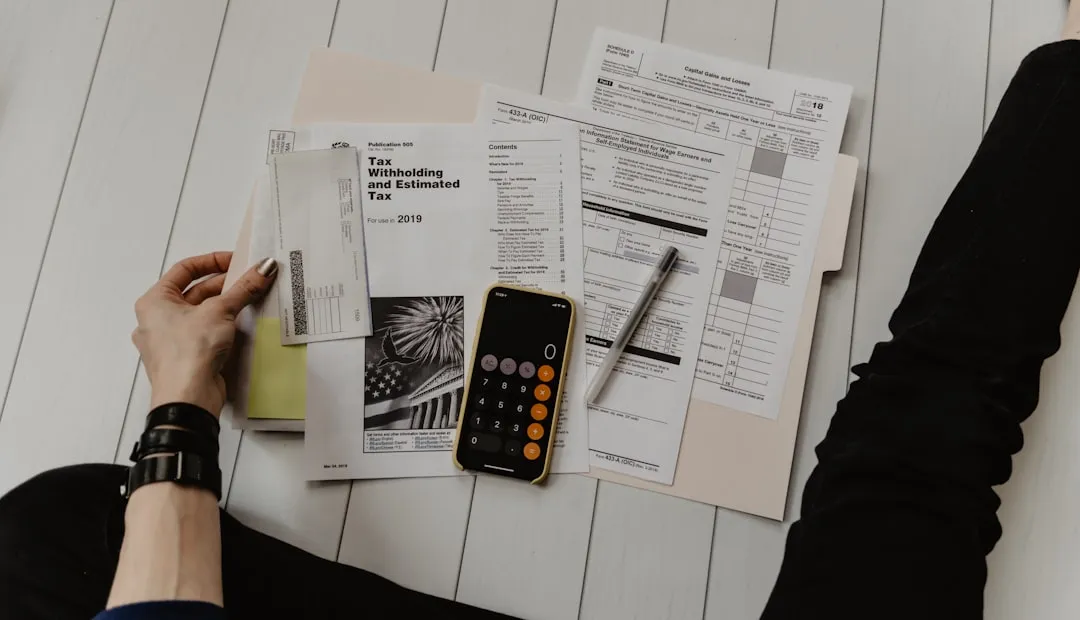
Let’s walk through the math that kills deals. Real numbers, simplified.
The Setup:
- Purchase price: $4,000,000
- SBA 7(a) loan: $3,600,000 (90% financing)
- Seller-reported EBITDA: $800,000
- Loan terms: 10-year, 11.5% rate
- Annual debt service: approximately $620,000
On seller-reported numbers:
- DSCR = $800,000 / $620,000 = 1.29x
- Just above the 1.25x floor. Tight but approvable.
After QoE adjustments (22.5% reduction):
- QoE-adjusted EBITDA: $620,000
- DSCR = $620,000 / $620,000 = 1.0x
- Below the floor. Deal denied.
Now you have three options, none of them painless:
- Bigger equity injection. Reduce the loan amount until DSCR clears 1.25x. In this example, you’d need roughly $800K more in equity. Where is that coming from?
- Lower purchase price. Renegotiate with the seller based on QoE-adjusted earnings. Good luck. The seller budgeted their retirement on reported numbers.
- Deal dies. You’ve spent $25K-$35K on the QoE, $15K+ on legal, months of your life. Gone.
The gap between seller-reported and QoE-adjusted earnings is where most deals face stress. As CLA’s analysis details, this adjustment gap is precisely why the SBA mandated the report — too many loans were sized on earnings that didn’t hold up.
The lesson: never size a deal on seller-reported EBITDA. Size it on what you believe the QoE will show. If the deal doesn’t work at adjusted earnings, it doesn’t work.
Timing and Tactics: What to Do Right Now
The clock is running. Here’s what matters depending on where you are in the process.
If You’re Mid-Deal Right Now
Get your SBA loan application submitted and numbered before October 1. In-process applications continue under the current SOP. Once you have a loan number, you’re grandfathered. This is not a drill — 22 days is barely enough time if your lender package isn’t ready.
Call your lender today. Not tomorrow. Not Monday. Today.
If You’re Planning an Acquisition
Budget $25,000-$35,000 for the QoE from day one. Build it into your total acquisition cost model alongside legal, appraisal, environmental, and insurance. This is no longer a nice-to-have line item. It’s mandatory for every SBA 7(a) deal over $3M.
Resources like Lendesca can help you map total acquisition costs including the new QoE requirement, so the number on closing day matches the number you planned for.
Choose Your QoE Provider Carefully
Not every CPA firm does QoE work, and not every firm that does QoE work has SBA-specific experience. The SBA’s requirements for what the report must cover are specific. A provider unfamiliar with SBA lending standards may deliver a report that doesn’t satisfy the lender.
Ask for:
- SBA transaction advisory experience specifically
- Sample scope of work for an SBA QoE engagement
- Timeline commitment (most take 3-6 weeks)
- References from SBA lenders, not just buyers
Weaver’s M&A perspective on the requirement provides a useful breakdown of what qualified providers should deliver.
Start the QoE Conversation With Your SBA Lender Now
Provider availability is about to get tight. Every acquisition over $3M closing after October 1 now needs a QoE. That’s a massive demand spike hitting a relatively small pool of qualified providers.
If you wait until your lender tells you it’s required, you’ll be scrambling for availability while your rate lock ticks down and your seller gets nervous.
The Bottom Line
The QoE requirement isn’t designed to stop acquisitions. It’s designed to stop bad ones. If the business you’re buying has real, sustainable earnings, the QoE confirms that — and you close with confidence instead of hope.
But if you don’t prepare for it — financially, strategically, and on the calendar — this $25K report becomes the wall between you and business ownership.
Know the cost. Budget the cost. Control the timeline. Close the deal. And if you need a concrete week-by-week plan, read the October 1 lending countdown.
HerCapital covers the policies, systems, and capital strategies shaping women’s business ownership. No sponsored content. No soft-pedaling.