
The Funding Source Nobody Applies For
Your customers are already willing to pay you. The only question is when they pay.
Traditional business logic says: deliver first, invoice later, wait 30–60 days, chase payment, use that cash to fund the next round. That sequence is a trap. It means you’re always funding tomorrow’s growth with yesterday’s revenue — or worse, with a lender’s money at their terms.
The shift is simple: collect first, deliver later.
This isn’t exploitative. It’s how every subscription works. Every retainer. Every pre-order. Every deposit. Every membership. You’ve paid for things in advance hundreds of times without thinking twice about it.
“Customer-funded growth isn’t a hack. It’s a business model decision that eliminates the middleman between your customers’ willingness to pay and your ability to grow.”
Why this matters specifically for women founders
The lending system has bias baked into every touchpoint:
- Application stage: Women receive 23% less than they request on average
- Interest rates: Higher rates even with identical credit profiles
- Collateral requirements: More personal guarantees demanded
- Approval rates: Lower across every lending category
Customer-funded models bypass the entire system. No application. No interest rate. No personal guarantee. No equity dilution. No explaining your business to someone who doesn’t understand your market.
Your customers already understand your value. Use that.
The 5 Customer-Funded Models (With Real Math)
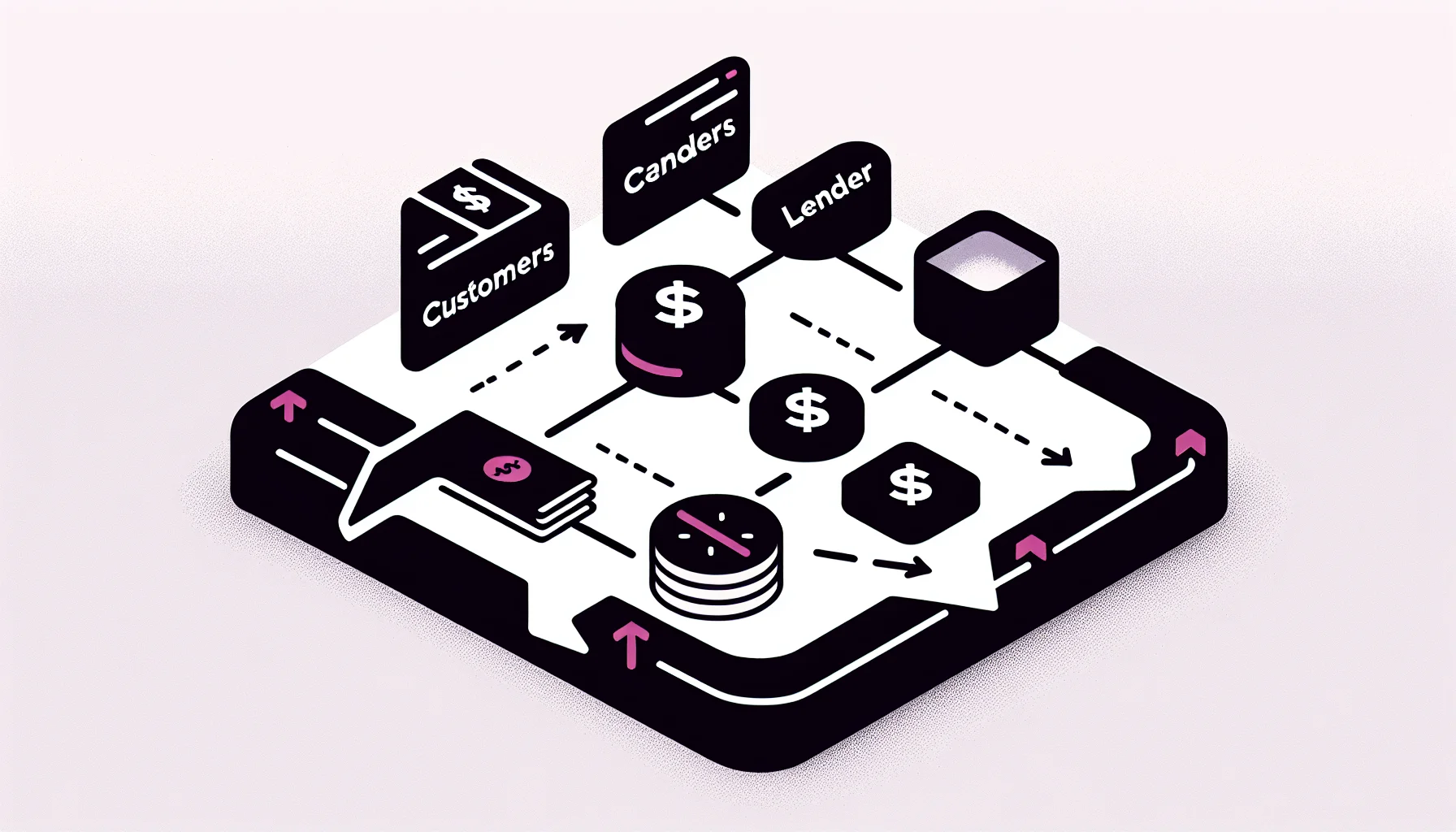
1. The Pre-Order Model
How it works: Sell the product before you build or stock it.
The math:
- Product costs $50 to manufacture, sells for $120
- 420 pre-orders × $120 = $50,400 in capital
- That $50,400 funds your first production run — zero debt
Works for: Physical products, online courses, software features, creative projects.
Key requirement: You need an existing audience or strong proof of concept. Even 500 engaged email subscribers can generate meaningful pre-order revenue.
How to de-risk it: Set a minimum threshold. “If we don’t hit 200 pre-orders by [date], all payments are refunded.” This protects you AND creates urgency.
2. The Annual Retainer
How it works: Lock in 12 months of revenue upfront at a 10–15% discount.
The math:
- 10 clients paying $5,000/month = $600,000/year
- Offer 12% discount for annual prepayment: $52,800/client instead of $60,000
- Get 5 clients to prepay = $264,000 immediate capital
- You “lose” $36,000 in discounts but gain a quarter-million in working capital — without a single application
Works for: Service businesses, consultants, marketing agencies, bookkeepers, virtual assistants, coaches.
The pitch: “Pay annually, save 12%, and lock in this rate before our January increase.” Clients love predictability too.
3. The Founding Membership
How it works: Sell limited-access memberships before you open.
The math:
- 200 founding members × $500 = $100,000 build capital
- Or: 50 premium founding members × $2,000 = $100,000
- Founding members get: lifetime rate lock, exclusive access, input on design/offerings
Works for: Fitness studios, coworking spaces, online communities, wellness centers, creative spaces, mastermind groups.
Why it works psychologically: People love being first. They love insider status. They love saying “I was a founding member before it blew up.” You’re selling belonging, not just access.
“200 founding members isn’t just $100K in capital. It’s 200 people invested in your success who will refer friends, leave reviews, and show up on day one.”
4. The Customer Deposit
How it works: Collect 50% upfront on large projects.
This isn’t unusual — it’s industry standard in construction, events, custom manufacturing, interior design, and wedding services. If you’re NOT collecting deposits, you’re financing your clients’ projects with your own cash.
The math:
- 4 projects at $25,000 each
- 50% deposit on signing = $50,000 working capital
- That $50K funds materials, subcontractors, and operations for all four projects simultaneously
Works for: B2B services, custom manufacturing, event planning, interior design, construction, web development, any project-based work over $5K.
The reframe: You’re not asking for a favor. You’re establishing professional terms. Clients who won’t pay 50% upfront are clients who’ll be slow to pay the other 50% later.
5. The Paid Waitlist
How it works: Charge a small fee ($25–$100) to hold a spot. Refundable or credited toward purchase.
The math:
- 1,000 waitlist spots × $50 = $50,000
- Even if 30% request refunds, you keep $35,000 AND have 700 confirmed buyers
- The waitlist fee credits toward purchase, so it’s not an additional cost for them
Works for: Product launches, limited-inventory drops, new location openings, program enrollment, seasonal offerings.
Dual purpose: A paid waitlist tests demand AND generates capital simultaneously. If nobody pays $50 to get on the list, you’ve learned something critical before investing $200K in a buildout.
How to Calculate Your Customer-Funding Potential

Here’s the formula:
(Average customer value) × (% willing to prepay) × (number of customers) = available capital
Run your numbers:
- What’s your average transaction or contract value?
- How many active customers or prospects do you have?
- What percentage would prepay if incentivized? (Conservative: 15–25%)
- Multiply. That’s capital you can access without a single application.
The prepay incentive sweet spot
- For annual payments: 10–15% discount. Below 10% isn’t motivating enough. Above 15% cuts too deep into margin.
- For waitlists: $25–$100 fee, fully credited toward purchase. The fee should feel insignificant compared to the final price.
- For founding memberships: 20–30% below future retail price, plus exclusive perks that cost you nothing (early access, input on decisions, recognition).
- For deposits: 50% is standard for custom work. Don’t go below 30% — it doesn’t generate enough working capital to matter.
Breakeven comparison
Ask yourself: How many prepaying customers equal one loan I don’t need to take?
Example:
- You need $75,000 for expansion
- A bank loan at 9% over 5 years costs you $93,456 total ($18,456 in interest)
- OR: 150 founding members at $500 = $75,000, zero interest, zero personal guarantee
The 150 members also become your first customers and biggest advocates. The bank gives you debt and a monthly payment. The choice is obvious.
The Trust Architecture: Why Customers Say Yes
Customers prepay when you reduce their perceived risk to zero. Here’s how:
1. Transparent communication
Tell them exactly what their prepayment funds. “Your founding membership directly funds the buildout of our studio space at [address], opening [date].” Vagueness kills trust.
2. Clear delivery timelines with accountability
- Specific dates, not “soon” or “Q3”
- Regular progress updates (monthly minimum)
- Public accountability — post updates where all prepaying customers can see them
3. Money-back guarantees
This is non-negotiable for pre-orders and waitlists. If you can’t deliver, they get their money back. Period. This reduces perceived risk to zero and dramatically increases conversion.
Important: Money-back guarantees rarely get used. Industry data shows refund rates of 5–15% for well-communicated prepay offers. Budget for it, but don’t fear it.
4. Social proof
- “Join 200 other founding members”
- Display a counter showing how many spots are filled
- Share testimonials from early adopters
- Name recognizable customers or companies who’ve already committed
5. Scarcity (real, not manufactured)
- Limited spots — and stick to the limit
- Early-bird pricing that genuinely increases later
- Exclusive access that genuinely isn’t available post-launch
- First-come benefits that reward early commitment
“The best prepay offers don’t feel like you’re asking for something. They feel like you’re offering something — early access, savings, exclusivity, belonging.”
When Customer-Funding Doesn’t Work (Be Honest)
This model isn’t universal. Skip it — or use it only as a supplement — in these situations:
Capital-intensive manufacturing with long lead times. If you need $500K+ before your first unit ships and your lead time is 18 months, pre-orders alone won’t cover it. The gap between cash-in and delivery is too large for customers to tolerate.
Highly regulated industries. Some industries have legal constraints on advance payments — healthcare, insurance, certain financial services. Check your state’s regulations before structuring prepay offers.
Brand-new businesses with zero audience. You need at least SOME customers, followers, or warm prospects to sell to. If you’re starting from absolute zero, you’ll need to build audience first. Rachel Kim’s bootstrapped growth story shows how to build that initial traction.
Infrastructure-heavy needs. Customer funding works brilliantly for inventory, delivery, and operating costs. It’s harder to justify when you need capital for equipment, real estate, or technology platforms that take months to deploy before generating any customer value.
When the honest answer is: you need both. And that’s fine. See below.
The Hybrid Approach: Customer Capital + Smart Debt
The most sophisticated growth strategies stack customer funding with strategic debt. They’re not either/or — they’re complementary.
The stack:
| Need | Fund with |
|---|---|
| Inventory & materials | Pre-orders and deposits |
| Operating capital | Annual retainers |
| Build-out costs | Founding memberships |
| Equipment & assets | Equipment loan or lease |
| Real estate | Commercial mortgage or SBA loan |
Use customer funding for what customers touch. Use traditional lending for assets that outlast any single customer relationship.
The credibility multiplier
Here’s what lenders never tell you: showing up with $200K in pre-orders transforms your loan application.
- It proves market demand (de-risks their investment)
- It shows you have cash flow before you even open
- It demonstrates business sophistication
- It means you need to borrow LESS, which means better terms
Walking into a bank with “I have an idea” gets you a 40% approval rate. Walking in with “I have $200K in confirmed pre-orders and need $150K for equipment to fulfill them” gets you funded.
For understanding which traditional funding strategies complement customer-funded models — and how to approach lenders from a position of strength — Lendesca breaks down the full landscape of options available to you.
The math of independence
Every dollar you raise from customers is a dollar you don’t borrow. That means:
- Less interest paid over time
- Fewer personal guarantees signed
- Less equity given away
- More leverage when you DO negotiate with lenders
Understanding the non-bank funding landscape gives you the full picture of what’s available. But start with the capital you can generate yourself — from the customers who already want what you’re building.
Your Action Plan: This Week
Don’t overthink this. Pick one model and test it:
- Audit your current payment timing. When do customers pay you relative to when you deliver? Can you shift that earlier?
- Identify your best candidates. Which customers are most loyal, most engaged, most likely to say yes to a prepay offer?
- Calculate your number. Use the formula above. What’s the realistic capital you could generate in 30 days?
- Design your offer. What discount, perk, or exclusive access justifies early payment?
- Set a minimum threshold. Below which the offer doesn’t launch and everyone gets refunded.
- Launch to your warmest audience first. Email list, existing clients, social followers. Don’t go broad until you’ve proven the concept narrow.
If you’re also building business credit simultaneously, you’ll have both customer capital AND borrowing power when you need to scale further. And you’ll avoid the credit card capital trap that catches founders who fund growth with 24% APR plastic.
The Bottom Line
The lending system wasn’t built for you. The data proves it. The approval rates prove it. The interest rate differentials prove it.
But here’s what the system can’t control: your customers’ willingness to pay you.
No loan officer approves a pre-order. No underwriter reviews a founding membership. No algorithm scores your waitlist. Your customers vote with their wallets — and they vote based on whether they want what you’re building, not whether you fit a risk model designed by people who’ve never met you.
That’s not just a funding strategy. It’s leverage.
“Every pre-order is a vote of confidence no bank can deny. Every founding membership is proof of demand no algorithm can discount. Your customers are your investors — and they don’t ask for equity.”
When you’re ready to explore what traditional funding looks like from a position of strength — with customer revenue already proven and negotiating terms instead of begging for approval — that’s when the system finally works in your favor.
Build the demand first. The capital follows.