In late April 2026, Sen. Mike Lee and Rep. Glenn Grothman introduced the “Ending Discrimination in Government Contracting Act.” The bill’s target list: contracting goals for socially and economically disadvantaged businesses, the 8(a) program, and — this is the part that should have your attention — Women-Owned Small Business preferences.
Not adjusted. Not restructured. Eliminated.
If you’ve spent the last year navigating WOSB certification, learning how to win government contracts post-certification, and watching the WOSB scorecard shuffle quietly cut your contracting goals — this is the next chapter. And it’s significantly worse.
What the Bill Would Do
The “Ending Discrimination in Government Contracting Act” would:
- Eliminate contracting goals for businesses owned by socially and economically disadvantaged individuals
- End the 8(a) Business Development Program — the primary vehicle for minority-owned businesses to access federal contracts
- Remove WOSB set-asides — the program that reserves certain federal contracts for women-owned small businesses
- Ban agencies from considering race, ethnicity, or sex when awarding contracts and grants
- Repeal the Minority Business Development Act of 2021
- Kill reporting requirements — agencies would no longer track contracts awarded to women-owned and disadvantaged businesses
What the bill would not touch: HUBZone preferences and veteran-owned business preferences. The distinction tells you everything about the political calculus.
The 8(a) Program Is Already Functionally Gutted
You don’t need to wait for the bill to pass to see where this is heading. The 8(a) program offers a preview:
- 2024: 2,100+ new firms admitted to the 8(a) program
- 2025: 65 new firms admitted
- 2026: Comprehensive audit launched; 4,300+ participants required financial documentation; over 1,000 firms suspended for noncompliance
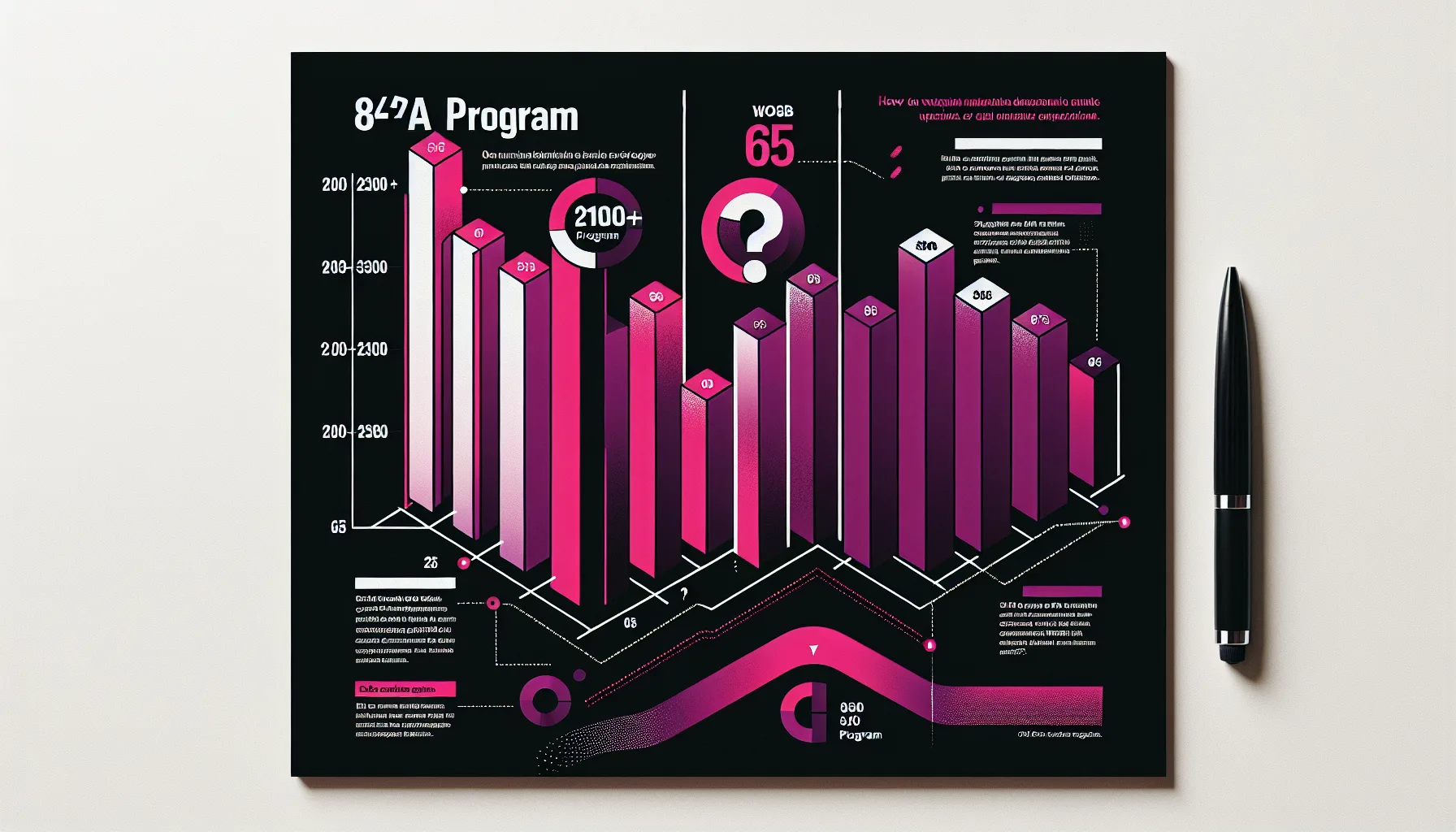
That’s not a policy adjustment. That’s a controlled demolition.
The Small Disadvantaged Business contracting goal has already been slashed from 15% to the statutory minimum of 5%. Contracting officers have been given discretion — which, in practice, means permission to deprioritize set-aside programs.
What This Means for WOSB-Certified Businesses
If the bill passes — or even if the legislative pressure simply accelerates administrative changes already underway — here’s what changes:
Revenue concentration risk. If more than 30% of your revenue comes from WOSB set-aside contracts, you have a structural vulnerability. The contracts themselves may continue to exist, but the preference mechanisms that put you in the room disappear.
Certification value shifts. WOSB certification would still exist as a designation, but without set-asides or contracting goals, the economic incentive collapses. The ROI calculation in our WOSB certification guide changes fundamentally.
Competition intensifies. Without set-asides, you’re competing in open pools against every business, regardless of size or ownership. The playing field doesn’t level — it tilts further toward incumbents with existing contracting relationships and larger bid teams.
Reporting goes dark. If agencies stop tracking contracts to women-owned businesses, the data that documents the gap disappears. You can’t fix what you can’t measure — and you can’t measure what nobody’s counting.
The Numbers Behind the Threat
Federal contracting is not a niche opportunity. According to SBA data, the WOSB Federal Contract Program covers 83 NAICS industry codes where women are underrepresented in federal procurement.
The broader set-aside ecosystem channels over $25 billion annually through small business preference programs. When DOGE contract cuts hit in early 2026, Brookings analysis found they disproportionately affected small, minority-, and women-owned businesses relative to their overall federal contracting share.
Meanwhile, the SBA lending gap persists: women own 43% of U.S. businesses but receive only 21.4% of SBA 7(a) loans by number and 18.7% by dollar volume. Losing contracting preferences while the capital gap remains open creates a compounding squeeze.
What to Do Right Now
The bill has no co-sponsors. It’s in committee. It may never pass. But the policy direction is clear, and the administrative changes are already happening. Here’s what to do:

1. Audit Your Revenue Concentration
Pull your last 12 months of revenue. What percentage comes from federal contracts? What percentage of those came through WOSB set-asides versus open competition? If more than 40% of your federal revenue depends on set-aside preferences, you need a diversification plan — not eventually, now.
2. Get WBENC-Certified
WBENC certification is the corporate equivalent of WOSB — but for private-sector supplier diversity programs. Corporations spend 58 cents of every revenue dollar on suppliers. Major companies have committed $50 billion+ to diverse supplier partnerships. The corporate pipeline is bigger, faster, and currently more stable than the federal one.
3. Build Commercial Relationships in Parallel
Don’t wait until your federal pipeline dries up. Start bidding on commercial contracts now, even small ones, to build a track record outside government procurement. Many of the same capabilities that won your federal contracts are valuable in private-sector B2B.
4. Join the Comment Period
When legislation moves, comment periods open. The WIPP (Women Impacting Public Policy) and National Women’s Business Council track these windows. Your voice in policy matters more when the comment record is thin — and right now, it’s thin.
5. Document Everything
If reporting requirements disappear, the only data left will be what businesses themselves track. Keep meticulous records of your contracting activity, set-aside participation, and revenue impact. This data becomes advocacy ammunition.
The Bigger Picture
The WOSB program wasn’t charity. It was a correction — an acknowledgment that women-owned businesses are systematically underrepresented in federal procurement relative to their share of the economy. Eliminating the correction without fixing the underlying disparity doesn’t create a level playing field. It restores the tilt.
The businesses that survive this policy environment won’t be the ones who wait to see what happens. They’ll be the ones who diversified their revenue, built commercial relationships alongside federal ones, and treated government contracting as one channel — not the only channel.
The contracting cliff isn’t here yet. But the ground is already shifting under your feet.