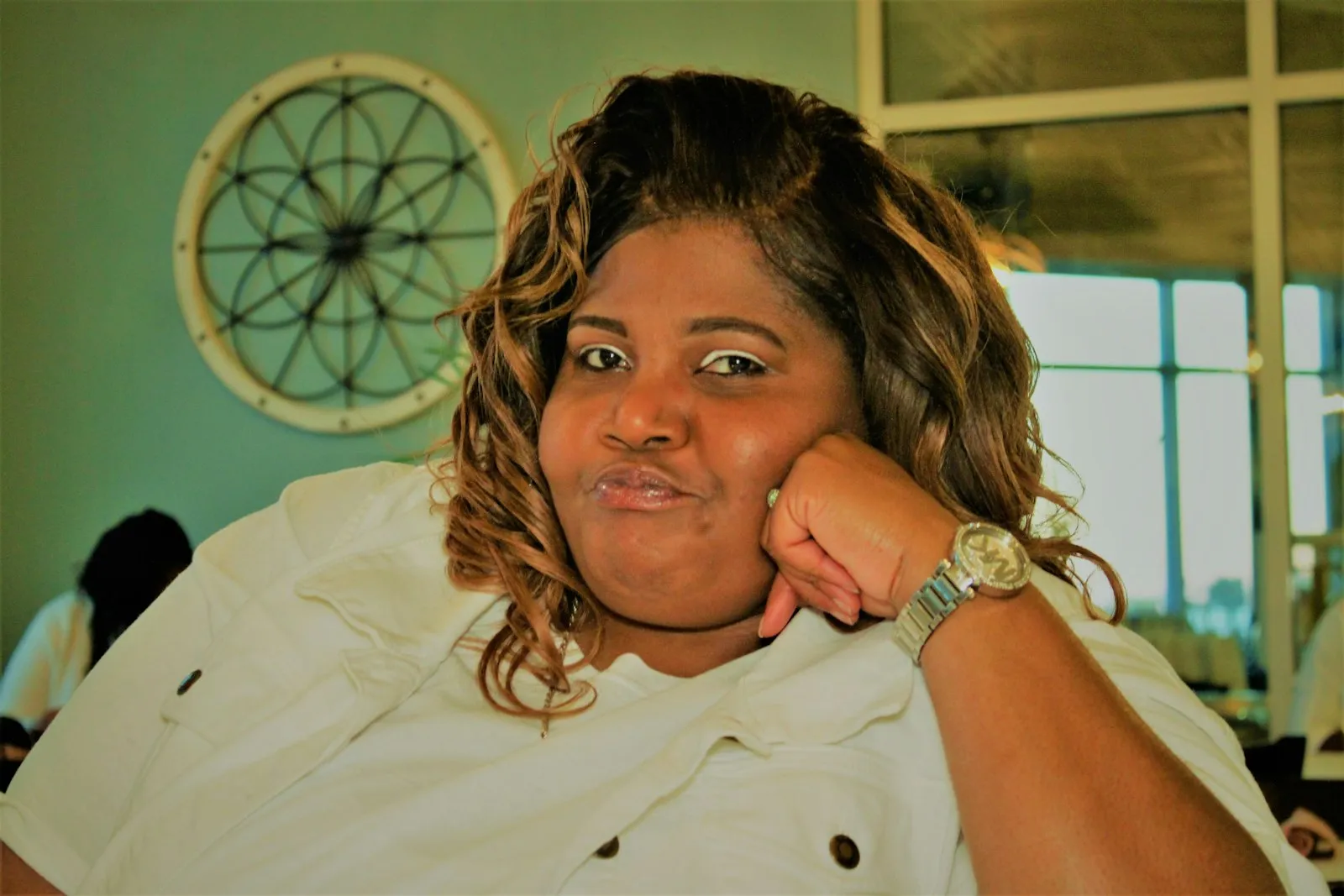
Angela Torres has a folder on her laptop labeled “No.” It holds four rejection letters, each from a different lender, spanning eighteen months of her life she’ll never get back. She keeps them not as reminders of failure but as a blueprint — proof that the system isn’t designed for women like her, and evidence that you can learn to work it anyway.
Today, Torres runs Cocina Fuerte, a full-service catering and corporate events company in San Antonio, Texas. She employs fourteen people, services clients across the healthcare and tech sectors, and is expanding into a commissary kitchen that will double her production capacity. The $350,000 SBA 7(a) loan that made it possible didn’t come easily. But it came.
This is how she got there.
The Business That Outgrew Its Own Cash Flow
Torres spent nine years in food service before she started Cocina Fuerte in 2019. She’d worked her way from line cook to catering manager at a regional hospitality group, learning the margins, the logistics, and the client relationships that make or break an event kitchen.
When she launched her own company, she bootstrapped. She used $28,000 in personal savings, leased shared kitchen time, and landed her first three corporate contracts through relationships she’d built while employed.
By 2021, she was doing $480,000 in annual revenue. By 2022, she’d crossed $700,000. Her team had grown from herself and two part-timers to eight full-time employees. The problem: her cash flow was a disaster.
Corporate clients pay on net-60 or net-90 terms. Her suppliers and staff don’t. She was constantly juggling a float she couldn’t sustain. She needed working capital and a commissary space of her own — a fixed facility that would allow her to take on larger contracts, reduce shared kitchen rental costs, and bring production in-house.
Her accountant’s estimate: she needed roughly $350,000. That meant a real loan. That meant the banking system. That meant a fight she didn’t fully understand she was walking into.
Rejection One: Insufficient Collateral (February 2023)
Torres walked into her primary business bank — where Cocina Fuerte had held its checking account for three years — with a business plan, two years of tax returns, and her revenue projections. She felt prepared.
The loan officer reviewed her file and came back with a requirement she hadn’t anticipated: collateral equal to 100% of the loan value. Torres owned her car outright and had $60,000 in equity in a condo she’d purchased in 2018. Her collateral position totaled roughly $130,000. The bank wanted a first lien on assets worth $350,000. She didn’t have them.
The rejection letter cited “insufficient collateral to secure the requested credit facility.”
What Torres didn’t know yet: this is a systemic issue. Research from the National Women’s Business Council consistently shows that women business owners hold less collateralizable wealth than men — a direct function of the gender wealth gap, not business performance. Lenders who rely heavily on personal asset collateral are, in effect, gatekeeping capital based on pre-existing wealth disparities.
Whether or not that bank intended to discriminate, the outcome is the same. If you’ve hit a wall like this, it’s worth understanding what you’re actually looking at — our guide on recognizing lending discrimination walks through how to identify when a rejection is systemic versus situational, and what your options are.
Torres filed it under “No” and kept moving.

Rejection Two: Thin Business Credit Profile (June 2023)
Three months later, Torres applied to a regional credit union that a colleague had recommended. The terms looked better — lower rates, more flexibility on collateral — and she was cautiously optimistic.
The rejection this time was different: her business credit profile was too thin. Cocina Fuerte had a DUNS number and an EIN, but it had no established trade lines reporting to Dun & Bradstreet, Experian Business, or Equifax Business. Her personal credit score was 718, which is solid but not exceptional. Without a robust business credit history, underwriters couldn’t separate Cocina Fuerte’s creditworthiness from her personal profile — and a personal score of 718 against a $350,000 ask was a stretch.
She’d assumed that running a profitable business for four years was enough. It wasn’t.
“I had no idea business credit was its own separate thing. I thought if I paid my bills and my business made money, that was the record. It turns out the record doesn’t exist unless you build it deliberately.” — Angela Torres
This is a gap that catches thousands of women business owners off guard. Building a business credit profile takes time — trade lines, vendor accounts that report, business credit cards with proper utilization — and the time to start is before you need a loan. Our guide on building business credit lays out the specific steps, timelines, and reporting tradelines that actually move the needle.
Torres spent the next four months aggressively building her business credit. She opened a Net-30 vendor account with a restaurant supply company and made sure it reported to Dun & Bradstreet. She applied for a business credit card through her credit union — smaller, but a start — and kept utilization under 20%. She registered with Dun & Bradstreet, updated her DUNS profile, and documented everything.
It wasn’t glamorous. It was infrastructure.
Rejection Three: Business Plan Gaps (October 2023)
By fall 2023, Torres had a stronger credit profile and had done additional work on her financials with a SCORE mentor she’d been connected with through a local SBDC event. She applied to an SBA-preferred lender — a mid-size bank with a dedicated small business lending division.
This time she made it further into the process. The loan officer reviewed her application, asked follow-up questions, and requested additional documentation. Torres thought she was through the hardest part.
The rejection came three weeks later. The issue: her business plan’s financial projections were flagged as unsupported. Her revenue model projected 35% growth in year one post-funding, but she hadn’t adequately demonstrated how the commissary expansion would drive that growth. The underwriter also noted inconsistencies between her projected cost of goods sold and her historical margins.
In plain terms: the numbers didn’t tell a clear story.
“I put the business plan together mostly on my own. I thought showing that I was growing was enough. But they weren’t just looking at growth — they wanted to see the mechanism. Why would $350K in a commissary produce $X in revenue? I hadn’t answered that.” — Angela Torres
She went back to her SCORE mentor, SCORE.org, which had connected her with a retired CFO who worked with food service companies. Together they rebuilt her financial model from scratch. They tied every revenue assumption to a specific operational improvement — reduced kitchen rental costs, increased production capacity, ability to take on contracts she’d previously had to decline. They built in sensitivity analysis showing what happened if growth came in at 15% instead of 35%. They made the model stress-test ready.
She also consulted the SBA’s 7(a) loan program overview directly, working to understand exactly what SBA lenders are required to evaluate and how business plans are typically scored in underwriting.
This was the hardest work of the entire eighteen months. But it was also the most valuable. She understood her own business better at the end of it than she ever had before.
Rejection Four: Industry Risk Classification (January 2024)
With a rebuilt business plan, stronger business credit, and a clearer understanding of the lending landscape, Torres applied again — this time through an SBA-preferred lender that specialized in food and hospitality businesses.
This rejection was the one that nearly broke her.
The lender’s underwriting committee flagged food service as a “high-risk industry” classification. The restaurant and catering sector has elevated default rates — the Federal Reserve’s Small Business Credit Survey data consistently shows that food service businesses face higher denial rates and less favorable terms than businesses in other sectors. The lender’s internal risk model applied a haircut to her projected revenue and cash flow on that basis alone.
Her debt service coverage ratio — the key metric showing how comfortably her revenue could cover loan payments — came in at 1.12x under the lender’s adjusted projections. Most lenders want to see at least 1.25x. She was close. Not close enough.
“They told me my business was viable but the sector was too risky. It felt insane. I had survived COVID. I had grown through a supply chain crisis. And they were telling me the industry was the problem.” — Angela Torres
At this point, Torres started exploring alternative lending paths. She looked seriously at CDFIs — Community Development Financial Institutions — which are federally certified lenders specifically designed to serve borrowers underserved by traditional banking. Our CDFI guide for women business owners explains how these lenders work and how to find ones that focus on food and hospitality businesses.
She also found resources like Lendesca, which helped her map the specific debt service coverage criteria across different SBA lenders — because not every preferred lender applies the same risk overlays. The SBA sets baseline standards, but individual lenders layer their own guidelines on top. Understanding which lenders applied lighter touches to food service was information she hadn’t known to look for.
She decided to try one more SBA application. But she changed her approach entirely.
What Changed on the Fifth Try
Torres made three specific changes for her final application, submitted in March 2024.
She targeted the right lender. Not all SBA preferred lenders are created equal. Some have explicit experience with food and hospitality lending. Some have community development mandates that make them more willing to work with Latina-owned businesses. She identified two lenders that met both criteria and applied to the one that responded fastest with genuine engagement from a loan officer who had personally worked with catering companies before.
She restructured the loan request. Rather than asking for $350,000 as a single working capital and equipment loan, she worked with her new loan officer to structure it as an SBA 7(a) with two distinct purposes: $210,000 for equipment and leasehold improvements (the commissary buildout), and $140,000 in revolving working capital. Separating the purposes made the collateral picture cleaner — equipment and improvements are real assets that lenders can lien — and her debt service coverage ratio climbed to 1.31x with the restructured projections.
She came with pre-existing lender relationships. Through those four months of building business credit, Torres had established a real relationship with a vendor and a business credit card issuer who could vouch for her payment history. Her SCORE mentor wrote a letter documenting eighteen months of advisory work. Her largest corporate client, a regional healthcare system, provided a letter of intent confirming they intended to renew and expand their contract. Torres didn’t just bring numbers — she brought evidence.
The approval came in May 2024. $350,000 at 6.75% over ten years, fully SBA-guaranteed.
She cried in her car in the bank parking lot for about seven minutes, she said. Then she called her accountant.
What Women Should Take From Angela’s Story
If you’ve been denied — once, twice, four times — the what to do after a loan denial playbook is the place to start. Not because rejection is normal and you should just accept it, but because understanding exactly why you were denied is the only way to decide what to fix and what to fight.
The SBA loan strategies for women guide is also essential reading if you’re pursuing a 7(a) or similar federal program. Not all SBA lenders approach women-owned businesses the same way, and knowing how to evaluate lenders — not just be evaluated by them — is a skill Torres wished she’d had from the start.
A few hard-won lessons from Torres directly:
- Start building business credit the day you open your business. Don’t wait until you need a loan. The credit profile that matters to underwriters is the one built over time, not the one you construct in a hurry.
- Your business plan is a financial argument, not a vision statement. Underwriters are not inspired by growth. They are persuaded by mechanisms — specific reasons why specific investments will produce specific returns.
- Lender selection is a strategy. Research lenders the way you’d research any business partner. Approval rates, sectors they focus on, whether they have SBA preferred lender status — this information is available and it matters.
- Keep every rejection letter. They are a diagnostic tool. Read them carefully. Ask the loan officer, directly, what would have to be different for the answer to change.
- You are allowed to be angry. The system has structural bias baked into it. That anger is appropriate. It is also most useful when channeled into strategy.
The Commissary Opens This Fall
The buildout on Cocina Fuerte’s 4,200-square-foot commissary kitchen in San Antonio’s Southside is projected to complete in September 2026. Torres has already signed two new corporate contracts contingent on the expanded capacity — one with a hospital network, one with a tech company’s regional headquarters.
She still has the folder labeled “No.”
She’s not planning to delete it.
“Every woman who’s been told no needs to understand that the no isn’t final. It’s information. And information is something you can work with.” — Angela Torres
Cocina Fuerte is based in San Antonio, Texas. Angela Torres is a composite founder profile created to illustrate real lending challenges and strategies faced by women business owners. All financial figures and timelines are representative of real-world SBA lending experiences.
Additional resources: SBA 7(a) Loan Program · SCORE Mentorship · National Women’s Business Council Research · Federal Reserve Small Business Credit Survey